English and Spanish, with the same rules
Bilingual Answering Service for English, Spanish & 50+ Languages
When a Spanish-speaking caller reaches your business, they should get the same answer an English-speaking caller gets. Live US-based bilingual operators answer as your company, 24/7/365, take the same details, follow the same rules, and get the message to your team.
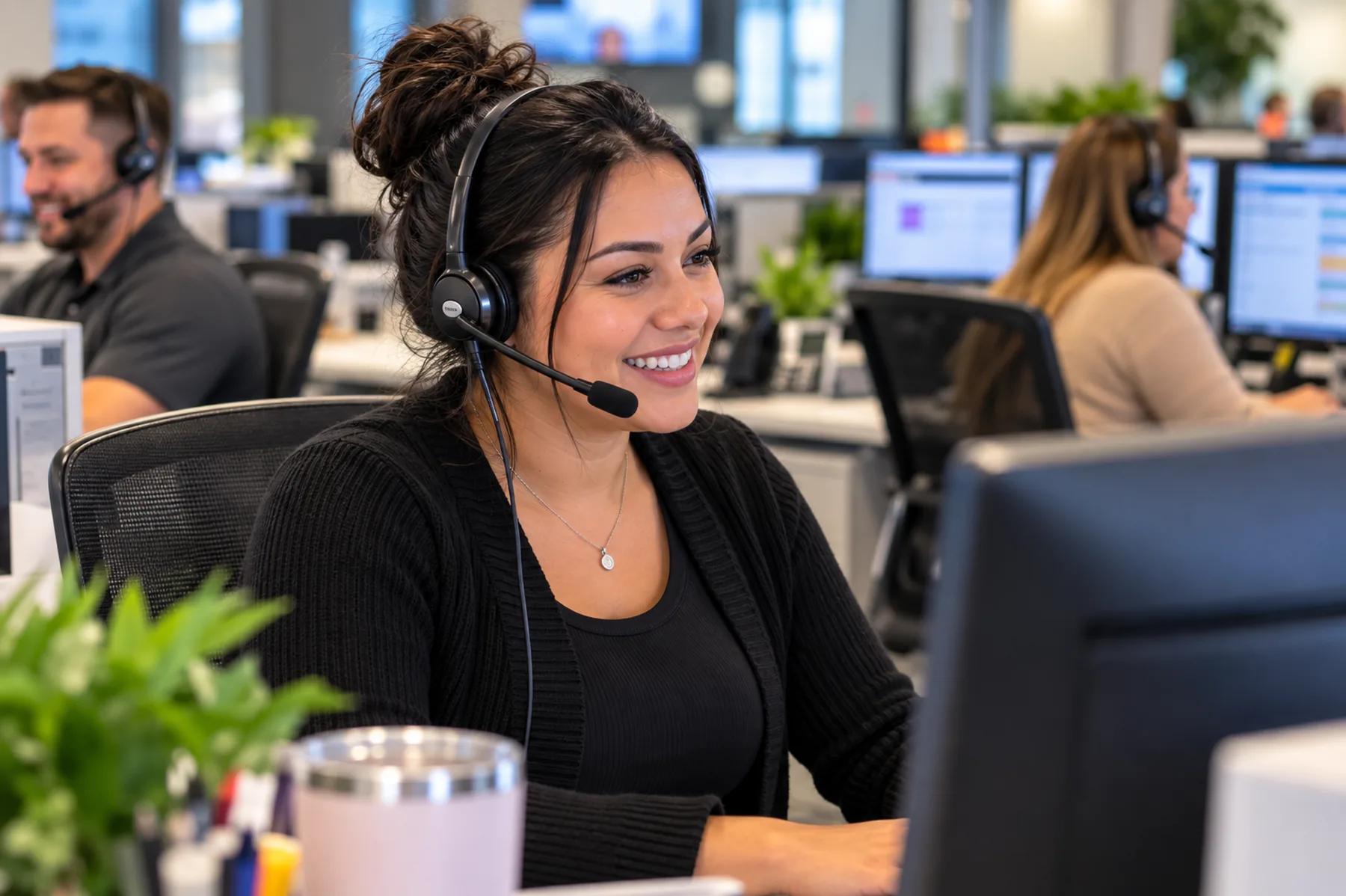
Operators on the floor right now
- 85M+Quality connections
- 65KEntrepreneurs served
- 30+Years in business
- ZERODays taken off
Why language matters on the first call
Same script, same rules, in the caller's language
A caller who has to struggle through a conversation in their second language often hangs up. Or they give a partial address, a callback number with one digit wrong, or a problem described in the few words they are sure of. For a service company, that is a missed job. For a property manager, it can be a leak that nobody understood was urgent.
So a Spanish-speaking caller is handled by a bilingual operator who works from the same script your English callers get. The greeting is your greeting, translated the way you approve. The questions are your questions, in the same order. The rules are your rules, so an emergency is still an emergency and a routine request is still booked for the morning. The details are read back to the caller in Spanish to confirm them, and the message reaches your team the way you set it up, by text and email.
Some businesses want a Spanish option in the greeting. Others want operators to switch languages as soon as they hear the caller. Some want only certain lines covered in Spanish. All of that is set in your instructions, and it can differ by line, by time of day or by type of call. What does not change is the standard: the Spanish-speaking caller is understood, the details are right, and your team gets a message it can act on without guessing. And for callers who speak a language other than English or Spanish, CallCenterUSA supports more than 50 languages.
Operators follow your script and rules in both languages. They do not translate documents or give advice in any language.
Calls your team can hand off
Bilingual Answering Service

New customer and sales inquiries
Quotes, estimates and first calls from Spanish-speaking prospects, captured with the same questions you ask in English and sent to your sales contact.

Appointments and service visits
Booked into your calendar or captured for confirmation, with the details read back in Spanish so the date and address are right.

Urgent and emergency calls
Screened by your rules in either language. Your safety instructions are read in Spanish first when a call warrants it, then your on-call contact is reached.

Tenant and maintenance requests
Unit, building, the problem and how urgent it is, taken in Spanish and routed by each property's rules.

Existing-customer messages
Status questions, rescheduling and billing callbacks, delivered to the right person by text and email.

Other languages
Callers who speak neither English nor Spanish are supported too. CallCenterUSA covers more than 50 languages.
Who we answer for
Businesses with Spanish-speaking customers
We answer in English and Spanish for home-service contractors, property managers and apartment communities, law firms, medical and dental offices on the business side, auto shops, and retail and e-commerce customer service. Coverage can be the whole line around the clock, a Spanish option on your main number, after hours only, or daytime overflow when your own bilingual staff is busy or out. The same US-based operators answer in every case, working on-site in our own buildings, so a Spanish-speaking caller at 2am gets the same care as one at 2pm. Many of these businesses already advertise in Spanish, or serve neighborhoods where a large share of customers prefer it. The phone is often where that promise breaks down, and it is the easiest place to fix.
Before you choose coverage
A straightforward answer.
Who answers Spanish-language calls?
Will Spanish-speaking callers get the same questions as English callers?
What language are the messages delivered in?
How do you handle an urgent call from a Spanish-speaking caller?
Can the greeting offer a Spanish option?
Does bilingual mean English and Spanish only?
Can you cover Spanish calls only when our bilingual staff is busy?
How long does it take to set up?
What should a business ask a bilingual answering service before signing?
Related services
Other ways we answer for teams like yours.
Give your callers a real person to reach.
Talk with our team about scripts, escalation and overflow coverage. No obligation, no automated runaround.