No Heat or Tune-Up? Sorting HVAC Calls Before They Reach Your Techs
10/15/2026
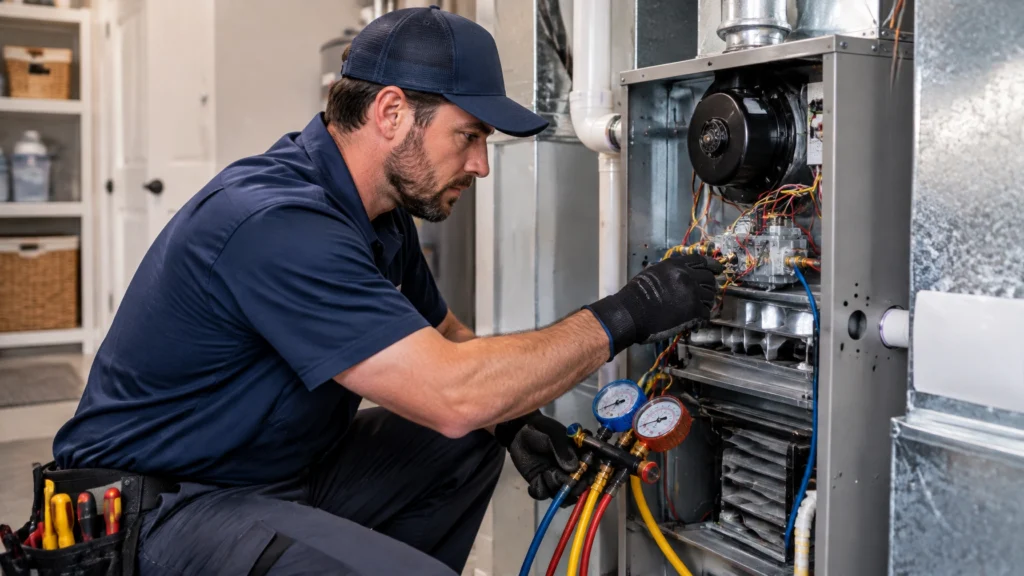
Every HVAC call matters, but not every HVAC call needs the same response. A no-heat call during freezing weather should not follow the same path as a spring tune-up request or a quote for a replacement system.
That distinction is especially important now, as residential contractors, commercial mechanical companies, and multi-location service groups manage unpredictable demand across phones, websites, dispatch teams, and on-call technicians. If every caller is treated as an emergency, your technicians lose time and your schedule becomes chaotic. If genuine urgent calls are handled like routine inquiries, customers may wait too long for help, and choose another contractor.
The answer is a clear, company-approved urgency process. With the right rules, your team can separate emergency, urgent, and routine requests before a technician is interrupted.
Start with three call priorities
The Golden Rule of call handling is simple: treat people the way you want your own customers treated. That does not mean promising immediate service to everyone. It means listening carefully, gathering the right details, setting accurate expectations, and following through.
A practical HVAC call process can use three priority levels:
- Emergency: A call that meets your company’s defined criteria for immediate escalation or on-call response.
- Urgent: A serious service problem that needs priority scheduling but does not meet your emergency criteria.
- Routine: A maintenance, estimate, scheduling, or lower-risk service request that belongs in the normal queue.
The labels are less important than consistency. Your dispatchers, office staff, and answering operators should all use the same definitions. Otherwise, one caller may be told to wait until tomorrow while another with the same situation receives an after-hours technician.

1. Define what qualifies as an emergency
Your operators should never diagnose equipment or make independent judgments about whether a situation is an emergency. They should use the urgency rules your company provides.
For example, your approved protocol may identify certain combinations of conditions as requiring immediate escalation:
- No heat or no cooling combined with an extreme indoor or outdoor temperature
- Conditions that could place a building, property, or critical facility at risk
- Active water discharge or damage connected to HVAC equipment
- A gas odor, carbon monoxide alarm, smoke, burning odor, or visible electrical concern
- A commercial facility issue affecting a temperature-sensitive area or essential operation
- A situation involving an occupant or facility condition that your company has specifically defined as urgent
The important point is not to create a universal checklist based on generic advice. Your company knows its service area, capabilities, insurance requirements, on-call structure, and customer commitments. Those factors should shape the rules.
A residential HVAC contractor may use one protocol for a single-family home. A commercial mechanical service company may need different rules for a restaurant, office building, school, warehouse, or property management portfolio. A multi-location group may also need location-specific contacts and escalation paths.
Talk is cheap if the process is vague. Put the rules in writing so your answering team can walk the walk.
2. Separate no-heat and no-cooling calls from routine requests
“No heat” and “no cooling” are not automatically identical to “send someone immediately.” They are signals that require additional questions.
An operator following your script may need to capture:
- The caller’s name and best callback number
- The service address or facility location
- Whether the system is producing any heat or cooling
- The reported equipment issue, using the caller’s own description
- Current conditions that your protocol requires the operator to ask about
- Occupant, tenant, customer, or facility details
- Any access instructions, gate codes, lockbox information, or building restrictions
- Equipment history or recent service information
- The requested timing and any scheduling limitations
These questions help your dispatcher determine the correct next step under your rules. They also prevent the technician from receiving a vague message such as, “Customer says the AC is broken.”
Imagine a commercial property manager calling after hours. The building has reduced cooling on one floor, but the system is still operating. That may require a different response from a residential caller reporting complete loss of heat during a severe cold snap. The difference is not for the operator to diagnose. The difference is for your company’s approved protocol to address.
A structured intake turns a stressful call into usable operational information.
3. Route tune-ups, maintenance, and estimates differently
Routine requests deserve professional handling too. A caller asking for a tune-up may become a maintenance-plan customer. A homeowner requesting a replacement estimate may become a high-value installation lead. A property manager seeking recurring service may represent work across multiple buildings.
These calls should not be treated as less important simply because they are not emergencies. They should be assigned to the correct workflow.
For routine requests, your script can capture:
- Service type, such as tune-up, inspection, repair, replacement, or estimate
- Residential or commercial location
- Equipment type and basic system information
- Property address and service area
- Preferred appointment windows
- Existing customer or new lead status
- Membership, maintenance-plan, or account information
- Access requirements
- Requested follow-up method
The operator can then book, confirm, or reschedule the appointment according to your scheduling rules. If your process requires dispatcher confirmation, the operator can collect the complete request and send it to the designated team member.
That is where an appointment scheduling service can support your workflow without forcing your technicians to stop work and answer administrative calls.
4. Build an escalation path, not just an emergency label
Calling something an emergency is only useful if everyone knows what happens next.
Your escalation plan should identify:
- The primary on-call contact
- The backup contact
- The approved contact method
- The number of attempts to make
- The time between attempts
- The information to include in each message
- The point at which the call returns to the normal queue
- The message the caller receives while waiting
- Any safety language your company has approved
For example, operators may be instructed to notify the primary technician by phone, then text the captured details, then contact a backup dispatcher if the first person does not respond. Another company may route calls through a dedicated dispatch platform.
The exact process is yours to define. The answering team’s job is to follow it accurately, record the attempt, and deliver the information through the route you select.

5. Use a simple decision tree your whole team can follow
When working in HVAC service, complicated scripts can slow down the conversation. Your process should be detailed enough to protect the business but simple enough for operators to use consistently.
A basic decision tree may look like this:
-
What is the caller trying to accomplish?
- Report a breakdown
- Request maintenance or a tune-up
- Ask for an estimate
- Change an appointment
- Ask a billing or general question
-
If the caller reports no heat or no cooling, what additional conditions does your protocol require you to check?
-
Are any company-defined emergency indicators present?
- If yes, follow the emergency escalation path.
- If no, continue to the urgent or routine workflow.
-
Is the system still operating, even if performance is poor?
- Follow your rules for priority scheduling or standard scheduling.
-
What information does the dispatcher need before taking action?
This structure gives your operators guardrails without asking them to act as technicians. It also helps new staff learn your process and gives experienced team members a reliable reference during a busy shift.
6. Protect technicians from unnecessary interruptions
Your technicians need enough information to act, but they do not need every caller transferred directly to them.
A technician who is driving, working on equipment, or speaking with a customer should not have to stop repeatedly for:
- Tune-up requests
- Routine estimate inquiries
- Appointment changes
- General service-area questions
- Calls that lack a complete address or callback number
- Nonurgent issues that can be scheduled during business hours
At the same time, your process should ensure that a genuine emergency is not buried in the routine queue.
This balance is one of the central benefits of an HVAC answering service. Your operators can use the scripts and urgency rules your business supplies, capture the fields your dispatcher needs, and route each call according to the approved next step. They do not diagnose the equipment or decide on their own what qualifies as an emergency.

7. Review the rules after real calls
No script is perfect on day one. Review recent calls with your dispatchers and technicians to find gaps.
Ask questions such as:
- Did the operator collect enough information?
- Was the priority level clear?
- Did the right person receive the message?
- Were routine calls kept out of the emergency channel?
- Did technicians receive too many incomplete transfers?
- Did callers understand what would happen next?
- Do residential and commercial accounts need different rules?
- Does each branch use the same escalation process?
Your call history can reveal patterns that are easy to miss during a busy week. Perhaps estimate requests are being sent to dispatch instead of sales. Maybe commercial callers need a facility contact field. Perhaps one location needs a separate after-hours escalation path.
Small adjustments can make the entire operation more predictable.
Give every HVAC caller the right next step
A customer with no heat needs confidence that the call is being handled correctly. A customer booking a tune-up needs a convenient appointment. A property manager reporting a mechanical issue needs accurate documentation and a dependable escalation path.
The right process gives each caller an appropriate response without asking your technicians to become full-time receptionists. With clear urgency rules, structured intake questions, and consistent scheduling workflows, you can protect emergency response while keeping routine work moving.
If you want to separate emergency HVAC calls from maintenance and estimate requests with a customized script and 24/7 live coverage, contact CallCenterUSA to discuss a process built around your service rules.