Customer Service Support Metrics That Actually Matter (And How to Track Them)
01/22/2026
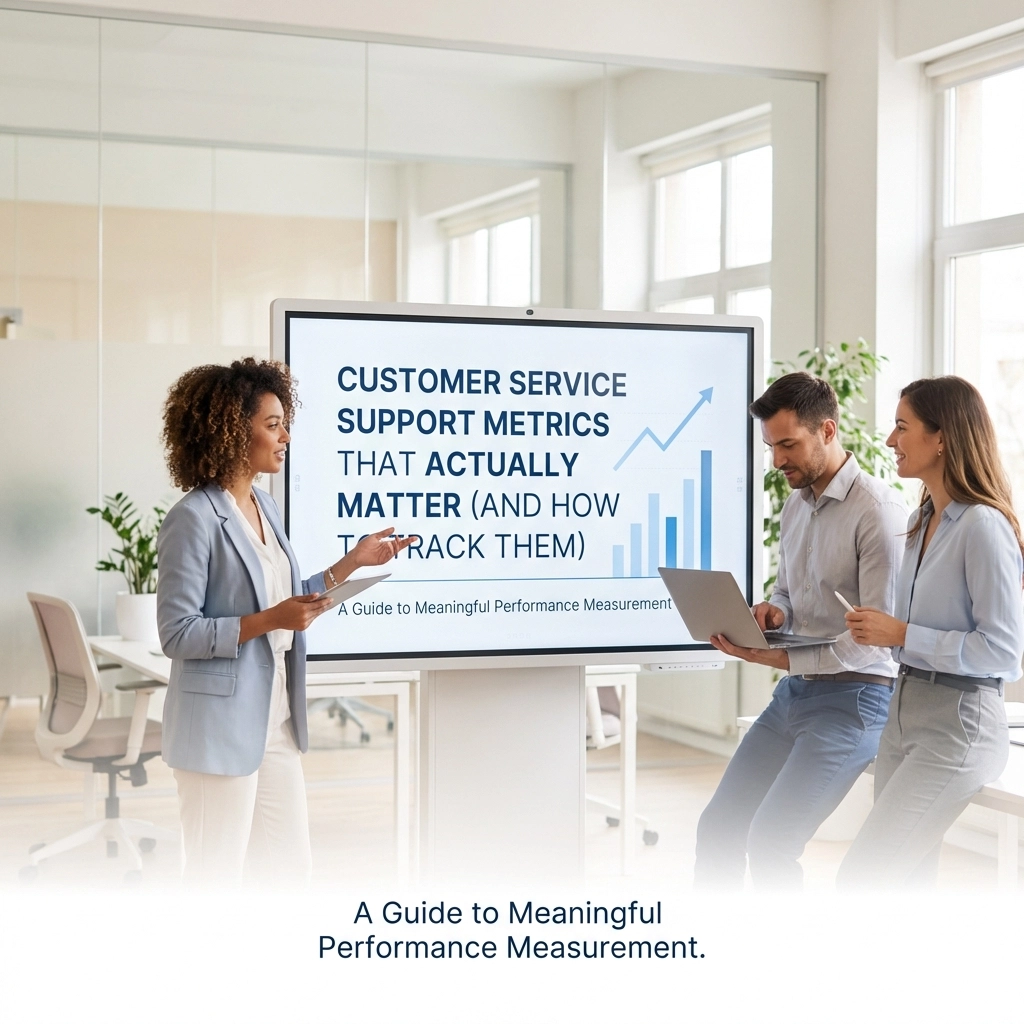
Talk is cheap. Numbers tell the real story.
When it comes to running a successful call center or customer service support operation, you can't improve what you don't measure. Yet many businesses track dozens of metrics without understanding which ones actually drive results. The outcome? Data overload and no clear direction.
Whether you manage an in-house team or work with a live answering service, knowing which metrics deserve your attention can transform how you serve customers. This guide breaks down the metrics that genuinely impact your bottom line and shows you exactly how to track them.
Why Customer Service Metrics Matter Now More Than Ever
Customer expectations have shifted dramatically. People want fast answers, minimal friction, and problems solved on the first try. A single bad experience can send them straight to your competitor.
For businesses using a call center in USA operations, metrics provide the roadmap for continuous improvement. They help you identify what's working, what's broken, and where to focus your resources.
The key isn't tracking everything. It's tracking the right things.

Experience Metrics: Measuring What Customers Actually Feel
These metrics capture customer perception. They tell you whether your customer service support efforts are hitting the mark from your customer's perspective.
Customer Satisfaction Score (CSAT)
CSAT is the most direct measure of how customers feel after interacting with your team. The formula is simple: ask customers to rate their satisfaction on a scale of 1-5 after a support interaction.
How to calculate it:
(Number of satisfied responses ÷ Total responses) × 100
A score above 80% generally indicates strong service quality. Anything below that signals room for improvement.
Why it matters: High CSAT scores correlate directly with customer loyalty and positive word-of-mouth. When your answering service or help desk services team delivers consistent satisfaction, customers stick around.
Net Promoter Score (NPS)
NPS answers one question: Would your customers recommend you to others?
Customers respond on a scale of 0-10. Those who score 9-10 are promoters. Those who score 0-6 are detractors. The rest are passives.
How to calculate it:
% of Promoters – % of Detractors = NPS
This metric helps identify your brand advocates and flags customers at risk of churning. A us call center team that consistently generates high NPS scores is doing something right.
Customer Effort Score (CES)
How hard do customers have to work to get their problems solved? CES measures exactly that.
After an interaction, ask: "How easy was it to get your issue resolved?" Responses range from "very easy" to "very difficult."
Lower effort equals higher loyalty. When customers have to jump through hoops, they remember it. A quality virtual receptionist service reduces friction by handling calls efficiently and routing them appropriately.

Operational Metrics: Measuring How Your Team Performs
Experience metrics tell you what customers think. Operational metrics show you how efficiently your team delivers results.
First Response Time (FRT)
Speed matters. FRT tracks how quickly your team responds to initial customer inquiries.
How to calculate it:
Total first reply time ÷ Total number of resolved tickets = First Response Time
Quick response times directly correlate with higher customer satisfaction. When someone calls your call center company near me looking for help, they don't want to wait. Every minute of delay chips away at their confidence in your business.
Average Resolution Time (ART)
This metric measures the total time from when a customer submits a request to when their issue is completely resolved.
How to calculate it:
Total duration of all resolved conversations ÷ Total number of resolved inquiries = ART
Shorter resolution times indicate effective call service operations. But be careful: rushing resolutions to hit arbitrary targets can backfire. Quality matters as much as speed.
First Contact Resolution (FCR)
FCR shows how often your team solves problems on the first interaction without requiring follow-ups.
How to calculate it:
(Issues resolved on first contact ÷ Total issues) × 100
High FCR suggests your team has the skills, training, and authority to address issues promptly. This metric is especially important for help desk services where customers expect quick, complete answers.
A well-trained live answering service team can dramatically improve FCR by gathering the right information upfront and routing calls to the appropriate specialist immediately.
Overall Resolution Rate
This measures the percentage of support tickets your team successfully resolves.
How to calculate it:
(Resolved tickets ÷ Total tickets received) × 100
Note the distinction: resolution rate tracks actual problem-solving, not just responses. A 95% resolution rate means your team is effectively closing out customer issues rather than letting them fall through the cracks.

How to Track These Metrics Effectively
Knowing what to measure is step one. Tracking it consistently is step two. Here's how to set up a sustainable measurement system.
Choose your tools wisely. Most modern call center platforms include built-in reporting dashboards. If yours doesn't, standalone tools like Zendesk, Freshdesk, or even well-structured spreadsheets can work.
Establish baselines first. Before setting goals, understand where you currently stand. Track each metric for 30-60 days without making changes. This baseline gives you a realistic starting point.
Set meaningful benchmarks. Industry averages provide useful context:
- CSAT: Aim for 80%+
- FCR: Industry average hovers around 70-75%
- FRT: Under 1 hour for email, under 1 minute for phone
Review regularly but don't overreact. Weekly reviews help you spot trends. Monthly deep-dives allow you to make strategic adjustments. Avoid knee-jerk reactions to daily fluctuations.
Connect metrics to actions. Every data point should tie to a potential improvement. If FRT is lagging, consider staffing adjustments or process improvements. If CSAT drops, dig into specific feedback to find the root cause.
Putting It All Together
The Golden Rule applies here: treat these metrics as tools for improvement, not weapons for punishment.
When your customer service support team understands why these numbers matter, they become partners in improvement rather than subjects of surveillance. Share results openly. Celebrate wins. Address problems collaboratively.
For businesses exploring whether to manage support internally or partner with a professional answering service, these metrics provide a clear framework for evaluation. Whether you're researching options or curious about us and how professional call center teams operate, start by understanding what success looks like in measurable terms.
The businesses that thrive are those that walk the walk. They track what matters, respond to what the data reveals, and continuously refine their approach.
Ready to Improve Your Customer Service Metrics?
Measuring is the first step. Acting on those measurements is where real improvement happens.
If your current customer service support operation isn't delivering the numbers you need, or if you're looking for a partner to handle calls while maintaining the quality your customers expect, we're here to help.
Contact us today to discuss how a professional call center can support your business goals.